Experience more of your own life.
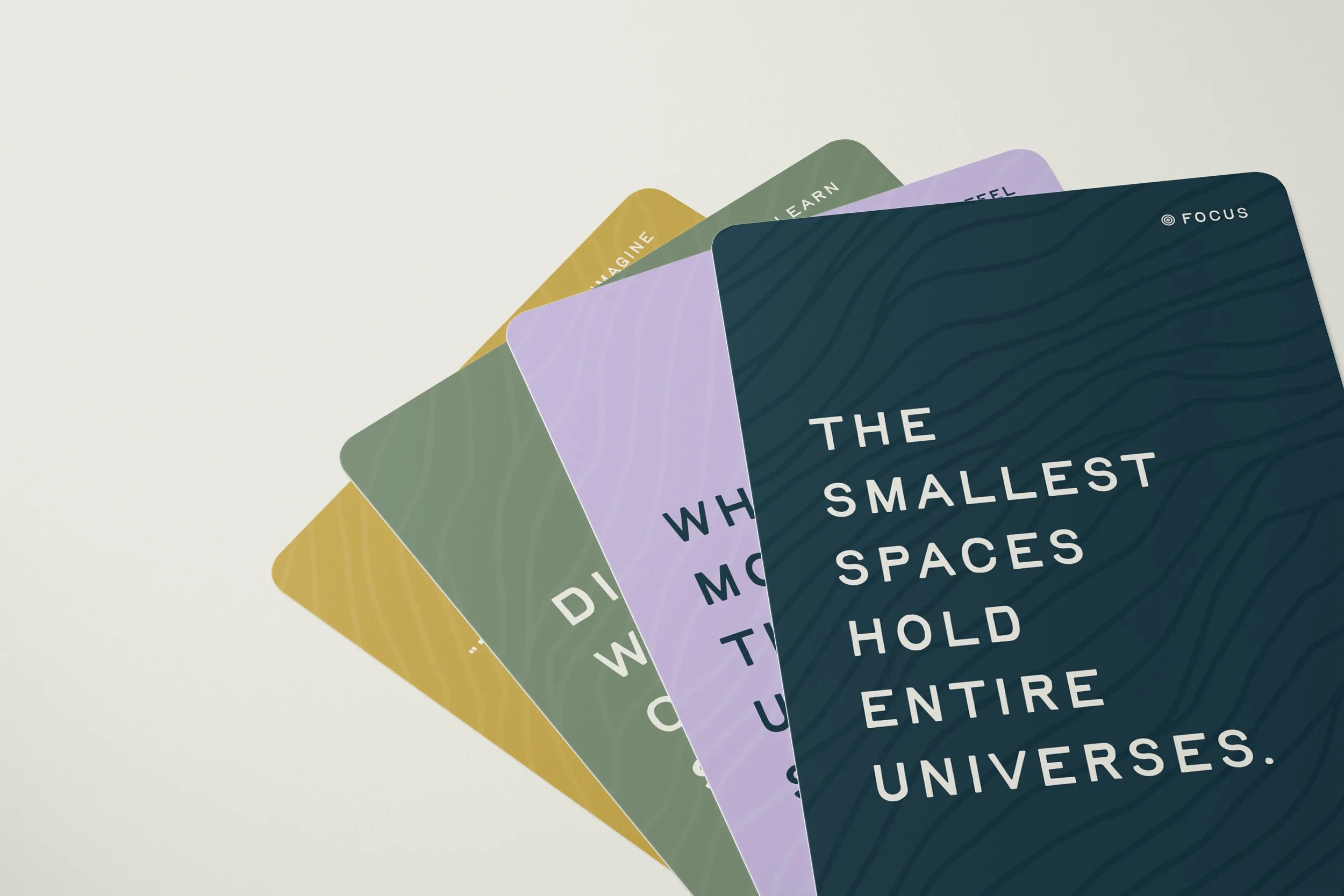
Pick a MicroExperience Card. At a campsite, a roadside stop, or close to home, follow what catches your attention and see where it takes you.
We give you a starting point and leave the experience yours to make.
Curious? Try a mini experience.
Three experience cards. Go outside. See what shifts.
Each one gets you outside with your camera, gives your brain one thing to focus on, and leaves you with something you actually noticed.
Try all three. No commitment.
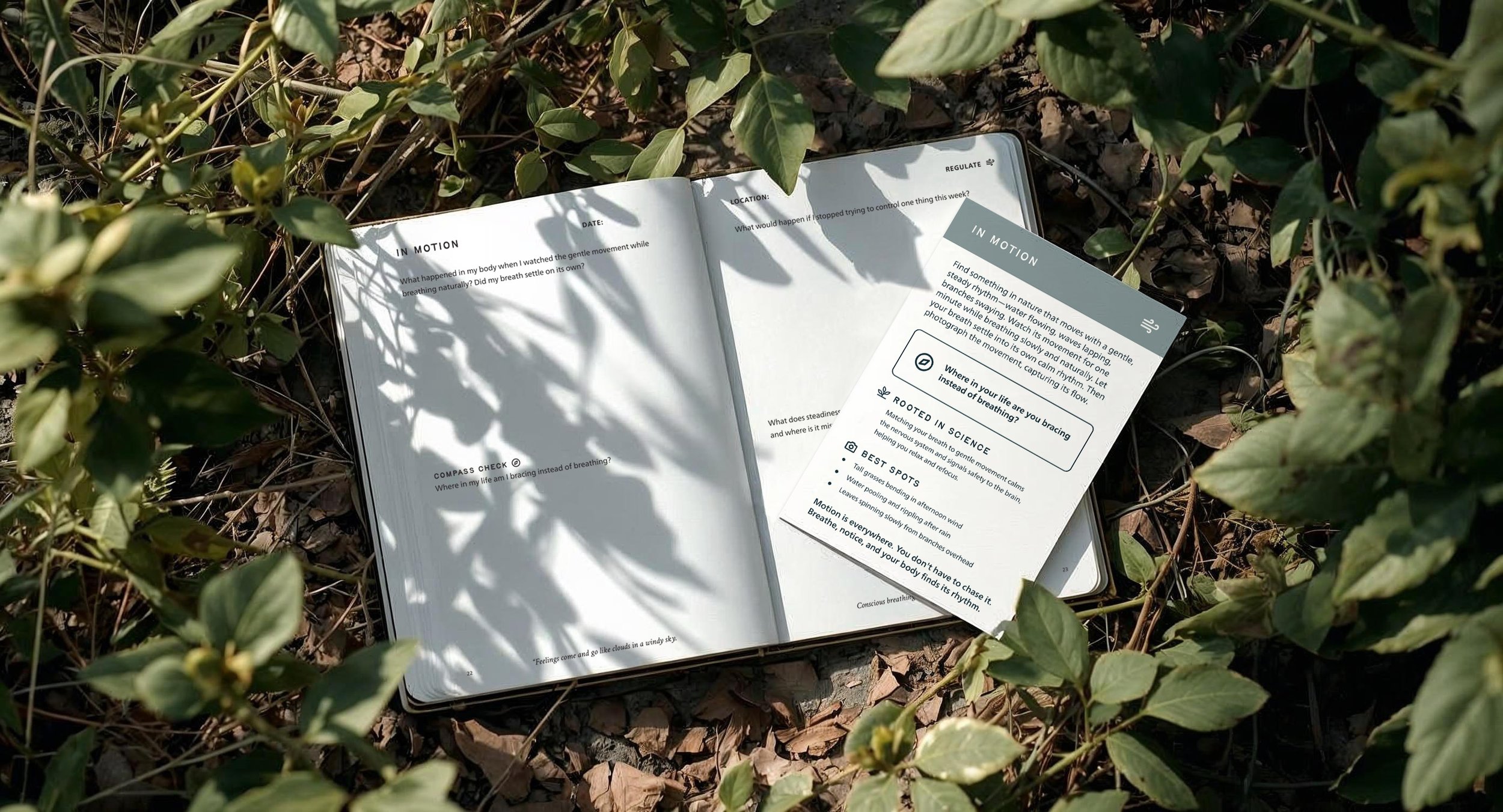
You’ll get your three experience cards, plus the occasional update, prompt, or idea worth sharing. No noise.
WHO the Microexperience cards and journal ARe FOR
This Is for You If:

Your days are full, but you want to experience more of them.

Even your adventures can start to follow a familiar script.

Your free time keeps slipping into the usual scroll.

Places you know have faded into the background.

You want to create, but getting started is the hard part.

Time together keeps turning into the same old plans.

MicroExperience Cards and Journal
A simple outdoor practice to help you feel calmer, more curious, and more open to possibility.
Immersive Workshops
Guided outdoor experiences for people who feel stuck and want to reconnect with creativity, clarity, and possibility.

Science-Informed Method
Inspired by research on how attention, creativity, and nature can help us think more clearly and adapt to change.

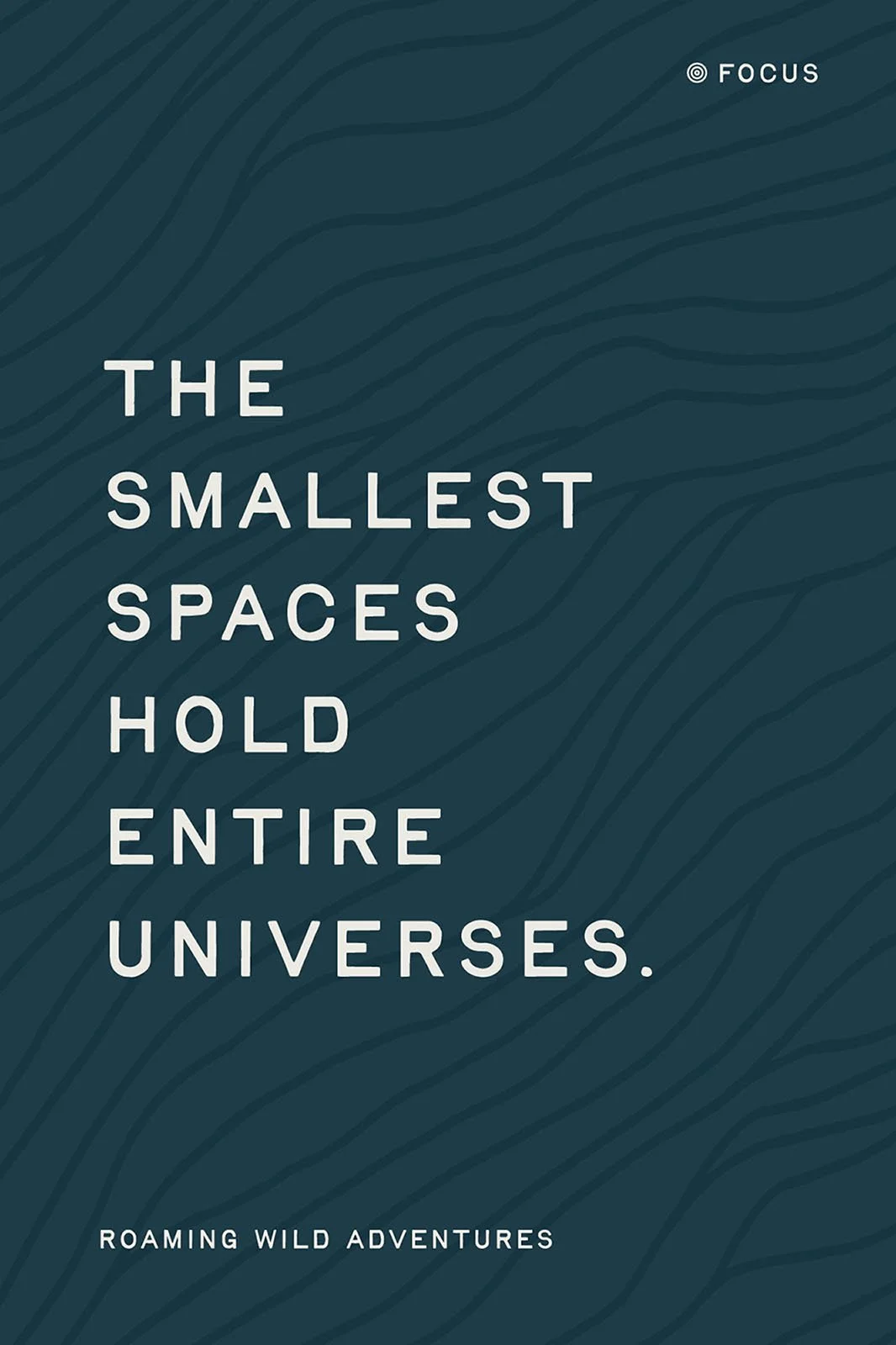
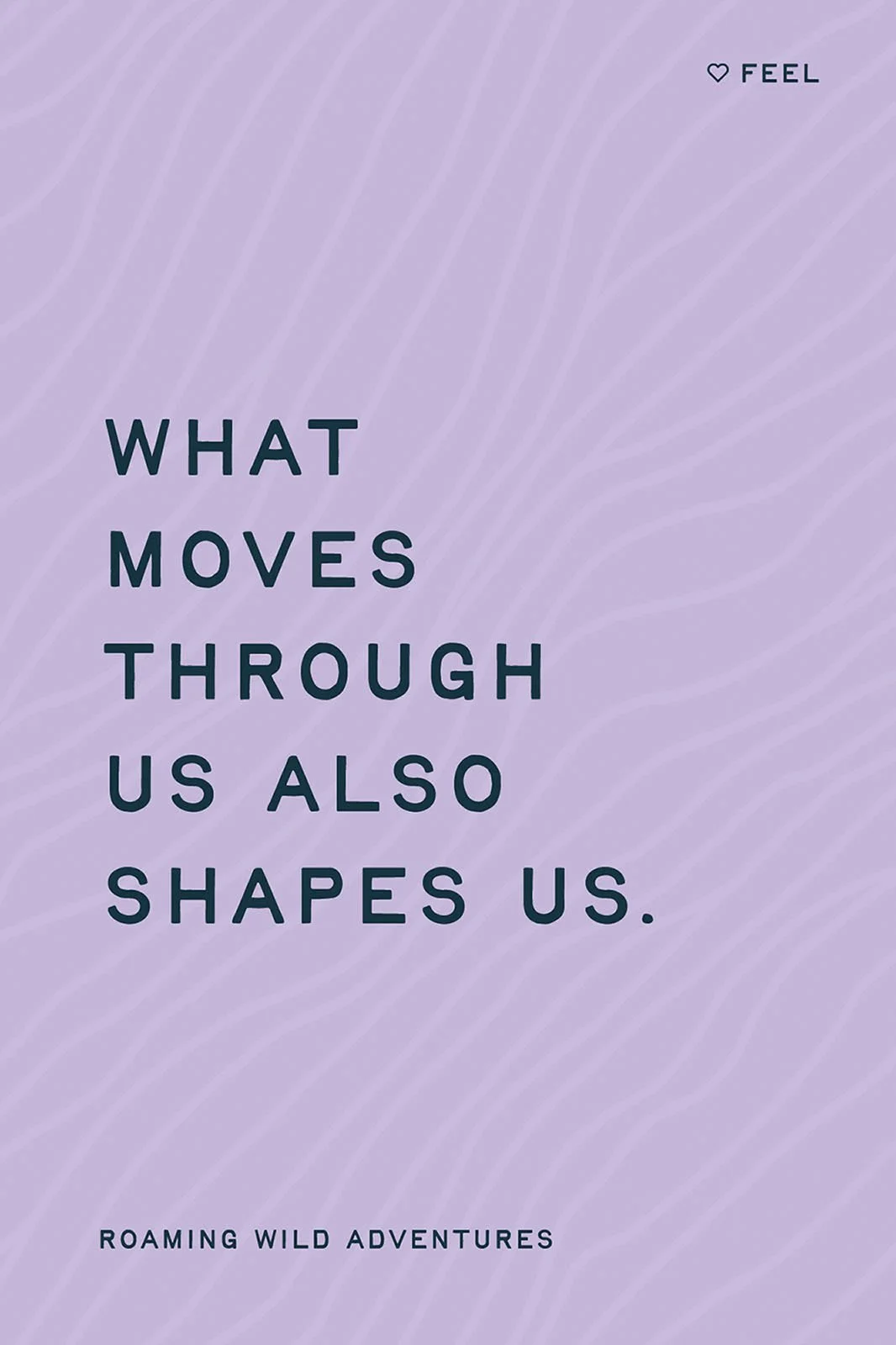
The 8 Trail Segments
The 8 Trail Segments guide you from feeling overwhelmed and stuck to feeling calmer, more curious, and ready to move forward.
01 Regulate: Settle your mind and body
02 Focus: Tune your attention
03 Feel: Let emotions shape your experience
04 Learn: Discover what the moment teaches
05 Create: Express what you’ve seen and felt
06 Imagine: Stretch your perspective
07 Connect: Anchor the experience in memory
08 Act: Carry it forward in life


Customer Reviews
“The Roaming Wild Adventures Micro Cards have been helpful for me in building new ways of seeing. About a year and a half ago I was diagnosed with ocular and vestibular migraine auras. My neurologist said they'd be debilitating. I've been spending as much time as possible in nature with my camera as part of managing my symptoms. These cards give me structure in that process and help me notice things differently. We live in a world where our nervous systems are constantly overstimulated. This gives me a way to reset, and I really enjoy it.”
— Cynthia D.
“I found myself feeling too busy to slow down or try something like this, but these cards proved the opposite. The truth is, I didn’t need more time, I needed to pause and actually be present. Even a few minutes with them helped me reset, clear my head, and notice things I’d been rushing past. Spring ended up being the perfect season to start—everything feels alive, and these prompts helped me reconnect with that energy. It’s become less about “finding time” and more about making space for what actually matters.”
— Catherine S.
“I had planned to do today's card in about 10-15 minutes, and suddenly it's 5 hours later and I'd just had the loveliest day outside. And all because of you!”
— Bryn C.
Informed by Neuroscience
This isn't just about taking better photos or feeling peaceful in nature. It's about training your brain to think more flexibly, notice more, and see possibilities you've been walking past.

Neuroplasticity
The more you practice seeing differently, the more natural it becomes to approach life with curiosity and flexibility.

Attention Training
What you focus on shapes how you experience the world.

Transferable Skills
The perspective shifts you practice outdoors can help you navigate challenges in everyday life.

No Gear Required. No Experience Needed.
Just Get Outside.
Three experience cards are your starting point. Each one gives your brain one prompt, takes about five minutes outside, and leaves you with something you actually noticed.
No photography background needed. Just grab your phone and go.
You’ll get three experience cards to try, plus the occasional update, prompt, or idea worth sharing. No noise.

The Founder
Veteran. Photographer.
Science explorer.
After two decades in the military, years behind a camera, and a deep fascination with how our brains adapt, I started wondering:
What if spending time in nature with a camera could help us feel calmer, more curious, and able to see new possibilities?
Roaming Wild Adventures is the result.




Ready to See the World Differently?