The Science
(without the jargon)
Your brain rewires around what you practice.
So what happens when you practice seeing differently?
This isn't pseudoscience or wishful thinking. It's neuroscience.
Your brain physically reorganizes itself based on what you pay attention to and how you move through the world. That's neuroplasticity. And when you combine creative practice, intentional attention, and nature immersion, you're creating the perfect conditions for building new neural pathways.
Full disclosure: I'm a nerd, not a neuroscientist. I'm an artist who's spent the last couple years diving deep into research on neuroplasticity, attention, and creative cognition because I wanted to understand why this practice works. What I'm sharing here is what I've learned—translated from academic papers into something actually useful.
Here's how it works.

NEUROPLASTICITY IN ACTION
What Is Neuroplasticity?
Your brain is not fixed. It changes based on experience, practice, and attention. New connections form.
Old ones strengthen or fade. This is neuroplasticity—your brain's ability to reorganize itself throughout your life.
Every time you practice a new skill, think in a new way, or physically move differently, you're building neural pathways.
Do it enough times, and those pathways become automatic. The skill transfers.
Which is wild when you think about it. Your brain is literally reorganizing itself based on whether you spent ten minutes photographing moss or scrolling Instagram. I find that both terrifying and incredibly hopeful.
How Photography Builds New Pathways
Photography activates multiple brain systems simultaneously:
-
![]()
Visual processing (seeing patterns, light, color, composition)
-
![]()
Attention regulation (choosing what to focus on, filtering distractions)
-
![]()
Decision-making (selecting subjects, framing choices, creative options)
-
![]()
Imagination (envisioning possibilities, "what if" thinking, seeing beyond the literal)
-
![]()
Sensory integration (noticing texture, temperature, sounds, smells in your environment)
-
![]()
Perspective-shifting (changing your viewpoint—mentally, visually, or physically when able)
-
![]()
Memory encoding (capturing moments, building associations, pattern recognition)
-
![]()
Emotional awareness (connecting feeling to visual experience, naming what you notice)
When you add creative problem-solving (there's no single "right" answer), intentional attention
(directing your focus deliberately), and nature immersion (regulating your nervous system),
you're creating rich neural activity that strengthens connections across brain regions.
The practice of shifting how you see—whether that's changing your physical position, adjusting what you pay attention to, or imagining a different perspective—builds the same mental flexibility you use when navigating challenges in daily life. You're training your brain to question its first impression and explore alternatives.
Why It Transfers to Daily Life
The creative problem-solving aspect is key. There's no single "right" answer in photography. You're constantly evaluating options, making choices, and asking "what else could I try?"
This builds executive function (the brain's ability to plan, focus, and self-regulate) and adaptive thinking (the capacity to shift strategies when circumstances change).
Your brain doesn't distinguish between "photography perspective-shifting" and "life perspective-shifting." The pathways you build apply everywhere.
When you're faced with a hard conversation, a frustrating situation, or an unexpected challenge, you might find yourself pausing, asking curious questions, and looking for angles you didn't see at first.
That's the transfer.
THE NATURE COMPONENT
Why Outdoors Matter
Nature isn't just a nice backdrop.
It's an essential part of the method.
Research shows that nature immersion
Activates the parasympathetic nervous system (your body's "rest and digest" mode)
Reduces cortisol (the stress hormone)
Improves attentional capacity (your brain's ability to focus)
Supports emotional regulation (helps you process feelings without overwhelm)
Enhances creative thinking (reduces mental rigidity)
When your nervous system is regulated, you're able to learn, experiment, and practice without the interference of chronic stress or distraction. Nature creates the conditions for neuroplasticity to happen more easily.

Attention Restoration Theory
Your brain has two attention systems:
Directed attention
(focused, effortful, draining—like working on a spreadsheet)
Involuntary attention
(effortless, restorative—like watching clouds)
Nature engages involuntary attention, which allows directed attention to recover. This is called Attention Restoration Theory, and it's one reason why practicing photography outdoors feels both engaging and calming.
You're focused, but not depleted. Active, but grounded.
The research on this is fascinating—turns out your brain is terrible at staying in directed attention mode for long stretches. Nature gives it permission to rest while still staying engaged. It's like a cognitive recharge that doesn't feel like rest.
The 8 Trail Segments
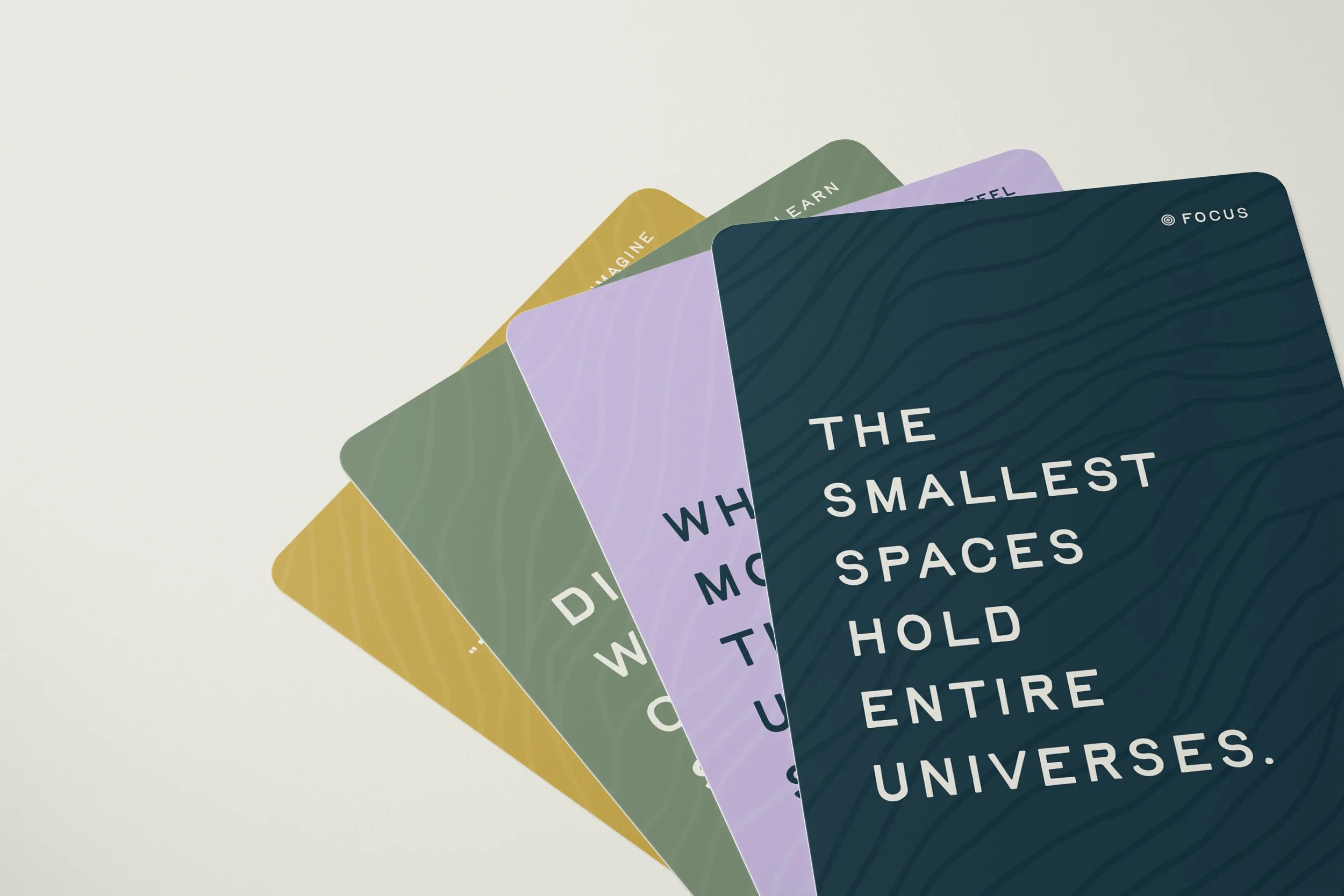
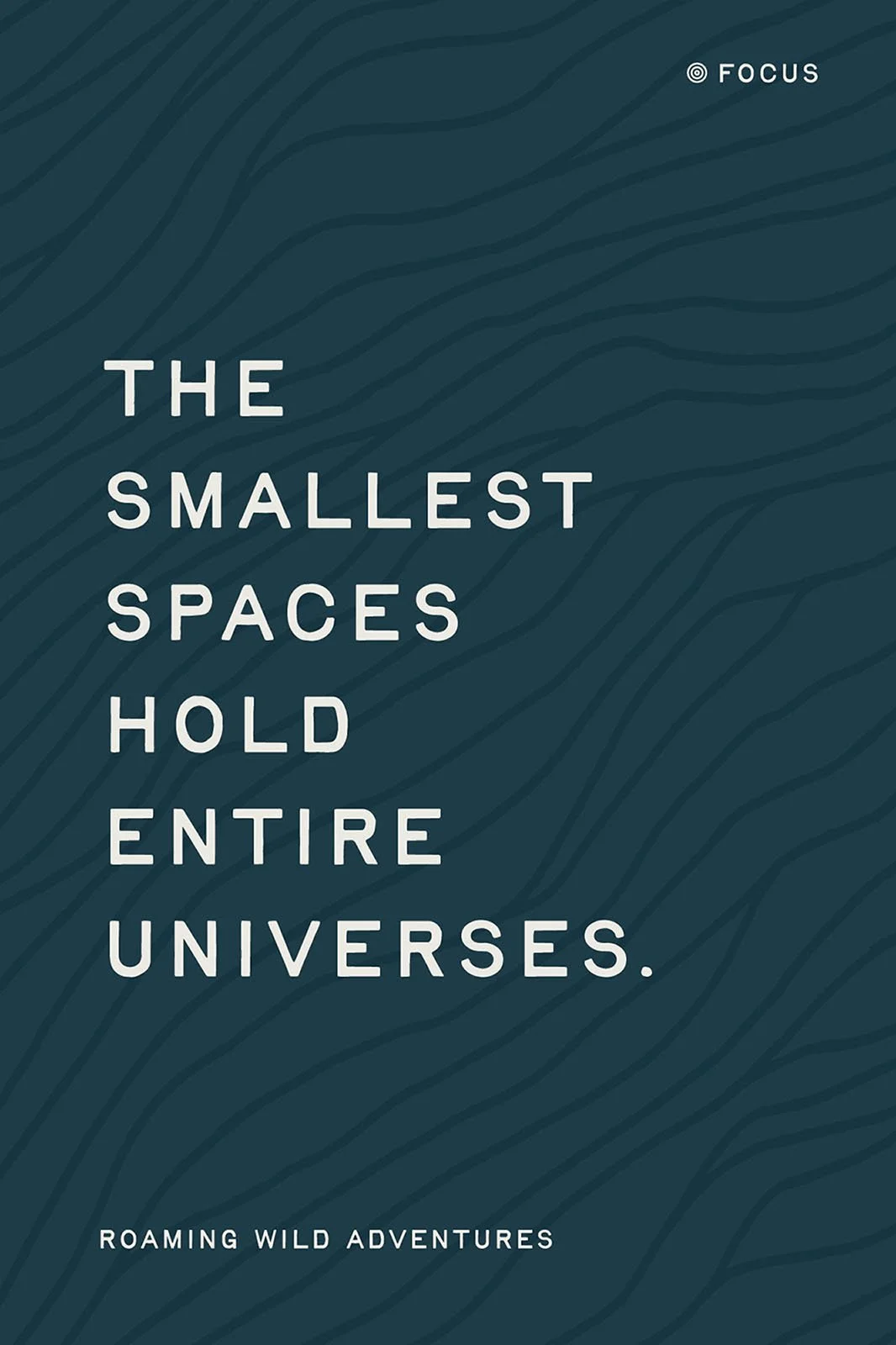
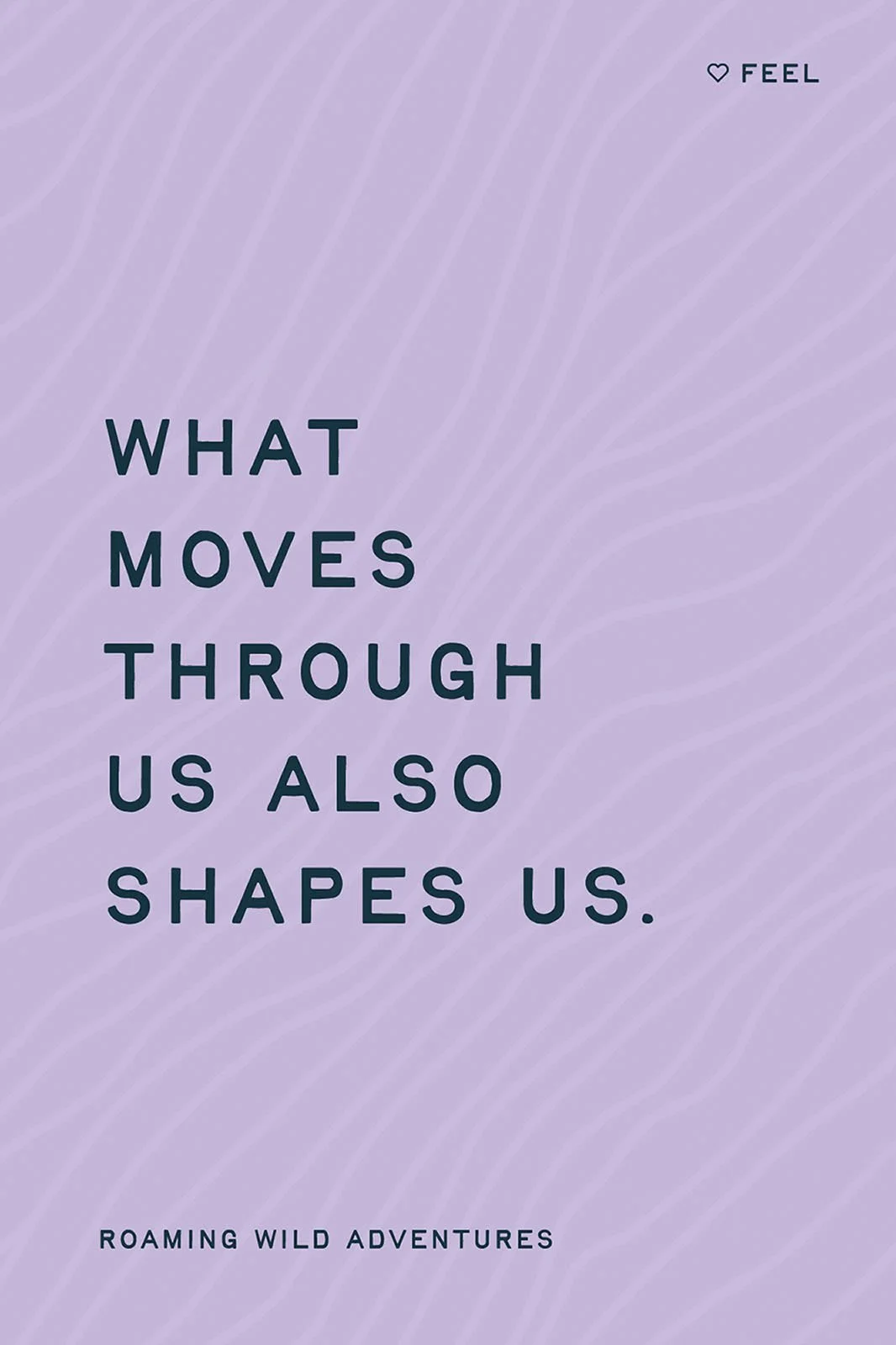
The RWA methodology follows how your brain naturally moves through experience—from regulation to action, from settling to integration. Each Trail Segment builds on the one before it, creating a complete cycle of practice, reflection, and skill transfer.

-
Settle your mind and body
Before you can fully experience the world around you, your body and mind need to slow down. Regulating helps you move out of distraction or stress so you can fully engage with the present.
What happens in your brain:
Parasympathetic nervous system activation. Reduced amygdala reactivity (fear/threat response). Increased prefrontal cortex activity (executive function, emotional regulation).
Why it matters:
You can't learn, create, or explore when your nervous system is in fight-or-flight. Regulation creates the foundation for everything else.
-
Tune your attention
Your attention is your lens. Focusing filters the noise and helps you see with clarity, making the ordinary feel new again.
What happens in your brain:
Strengthened attentional networks. Increased selective attention (ability to focus on one thing while filtering distractions). Enhanced working memory.
Why it matters:
Attention is trainable. The more you practice directing it intentionally, the better you get at noticing what matters.
-
Let emotions shape your experience
Emotions shape how we experience the world. Feeling connects you to the environment on a deeper level, turning observation into personal meaning.
What happens in your brain:
Integration of emotional and cognitive processing. Activation of the insula (emotional awareness). Strengthened connection between limbic system (emotion) and prefrontal cortex (reasoning).
Why it matters:
Emotions aren't obstacles to clear thinking—they're data. Learning to notice and name them builds emotional intelligence.
-
Discover what the moment teaches
Every place and moment has something to teach. Learning means noticing patterns, stories, and insights you might have missed.
What happens in your brain:
Pattern recognition networks activate. Hippocampus (memory formation) engages. New associations form between existing knowledge and fresh observations.
Why it matters:
Learning isn't just academic. It's the practice of staying curious instead of assuming you already know.
-
Express what you've seen and felt
Creating captures what you've experienced. Whether it's a photo, sketch, or a few words, making something turns observation into personal expression.
What happens in your brain:
Default mode network activation (mind-wandering, creative connections). Integration of sensory, emotional, and cognitive input. Strengthened memory encoding (experiences you create with are remembered better).
Why it matters:
Creation is how you make meaning. It transforms passive observation into active participation.
-
Stretch your perspective
Imagination lets you see beyond the literal. It helps you find new meaning and connections in what you've experienced.
What happens in your brain:
Prefrontal cortex and hippocampus work together (mental simulation, "what if" thinking). Increased cognitive flexibility (ability to consider alternatives). Strengthened divergent thinking (generating multiple solutions).
Why it matters:
Imagination is how you see possibility. It's the bridge between what is and what could be.
-
Anchor the experience in memory
Connection anchors experience into memory. When you connect—with nature, others, or yourself—the experience becomes part of who you are.
What happens in your brain:
Hippocampus consolidates memories. Social connection activates reward centers (even when connecting with nature or your own reflection). Narrative self-strengthens (your sense of identity evolves).
Why it matters:
Without connection, experiences fade. Connection makes change stick.
-
Carry it forward into life
This completes the cycle. Applying what you've gained ensures the experience doesn't fade, but shapes how you live, work, and see the world.
What happens in your brain:
Motor cortex engagement (planning, initiating action). Prefrontal cortex integration (linking intention to behavior). Habit formation pathways strengthen through repetition.
Why it matters:
Practice without application is just entertainment. Action is how new pathways become part of your daily life.
THE RESEARCH
Neuroarts:
An Emerging Field
Neuroarts is the study of how arts engagement impacts the brain, body,
and behavior.
It's an emerging field with growing research support from institutions like:
Johns Hopkins University (International Arts + Mind Lab)
National Institutes of Health (NIH)
National Endowment for the Arts (NEA)
Photography is uniquely suited for neuroarts application because it's:
Accessible (everyone has a camera)
Combines cognitive and physical demands (thinking + moving when able)
Works beautifully in natural settings (regulation + creativity)
Produces tangible outputs (photos you can reflect on)

Neuroarts Has Three Components
Art
(the create practice itself)

Science
(the research on how it affects the brain)

Technology
(the tools and methods used)

I'm the artist applying the results of the science and technology. I've studied the research, but I'm not conducting it—I'm translating it into practice that works in the real world.

Key Research Areas Supporting This Work
Neuroplasticity & Creative Practice:
Studies show that creative engagement strengthens neural connections, particularly in networks supporting cognitive flexibility, problem-solving, and emotional regulation.
Nature & Brain Function:
Research consistently demonstrates that nature exposure reduces stress, improves attention, enhances mood, and supports cognitive restoration.
Embodied Cognition:
Your body and brain aren't separate. Physical movement (like changing your angle to photograph something) actually influences mental processes. Moving your body to see differently helps your brain think differently.
Attention & Mindfulness:
Intentional attention practices—like focusing on a single object in nature—strengthen attentional networks and improve emotional regulation.
Why This is More Than Just Photography
It's a Practice You Can Geek Out On (Or Keep Simple)
If you love photography:
Yes, you'll learn technique. Workshops and resources will include composition tips, gear recommendations, and creative approaches when you want them. This isn't anti-photography education—it's photography education with a purpose beyond the image itself.
If you've never touched a camera:
Even better. You're not carrying assumptions about what a "good photo" should look like. You get to learn photography while simultaneously building cognitive flexibility. Two skills,
one practice.
If you're not a creative:
This is a low-stakes way to explore creativity without the pressure of being "an artist." The prompts guide you. The science explains what's happening. You're building neural pathways whether your photos are frame-worthy or not.
What Makes This Different
You're learning two things at once:
How to see and capture the world through a camera (photography as craft)
How to rewire your brain for flexible thinking
(photography as cognitive tool)
The beauty is that they reinforce each other. The better you get at noticing light and composition, the stronger your attentional networks become. The more you practice shifting perspective to find a better angle,
the more naturally you'll shift perspective when facing a challenge at work or home. And it's adaptable. Want to go deep on photography technique? Great, we'll teach it. Want to keep it simple and just follow the prompts? Also great. The neural pathway building happens either way.
This is a hobby that actually does something. You get beautiful photos AND a more flexible brain. You learn a creative skill AND build emotional resilience. You spend time in nature AND strengthen cognitive function.
Not bad for 15 minutes with a camera.
THE NATURE COMPONENT
Why Outdoors Matter

Think more flexibly when faced with challenges
Feel more grounded and less reactive
See options where they used to see walls
Build skills for navigating uncertainty
Reconnect with curiosity and wonder
Strengthen emotional resilience
Practice creative problem-solving in a low-stakes environment
You Don’t Need
Photography experience
Expensive gear
To be "good at art"
Perfect conditions or locations
You Just Need
Willingness to try something unfamiliar
A camera (phone is fine)
Curiosity about what you might notice
Field Notes

Frequently Asked Questions
-
Neuroarts is the study of how arts engagement impacts the brain, body, and behavior. It's an emerging field with research support from institutions like Johns Hopkins, NIH, and NEA. Photography is uniquely suited for neuroarts because it combines cognitive and physical demands, works in natural settings, and produces tangible outputs. There are three components: the art (creative practice), the science (research), and the technology (tools and methods). I'm the artist applying what the science has found.
-
No. You don't even have to like photography that much. The camera is just a tool for directing attention and practicing perspective-shifting. Technical skill is irrelevant. Read more about who this is for.
-
The methodology works best when you follow the 8 Trail Segments in order—they're designed to build on each other. That said, we're not being directive. If you need to jump to a Feel card because that's what you need in the moment, do it. The practice adapts to you.
-
No. RWA is an educational and creative practice informed by neuroscience. It's not a substitute for therapy, though it may complement therapeutic work. If you're working with a therapist, this can be a helpful addition.
-
It varies by person. Some people notice shifts immediately (feeling more grounded, seeing details they used to miss). Deeper changes (thinking more flexibly, responding differently to stress) usually show up over weeks or months of practice. Neuroplasticity takes repetition. Results are not guaranteed.
-
Yes. Most prompts can be adapted. You don't need to hike into wilderness. Perspective-shifting happens mentally, visually, and imaginatively—physical movement is just one option. Many cards work in accessible outdoor spaces (parks, gardens, sidewalks). Contact us if you have specific concerns.
-
You need less than you think. A potted plant, a patch of grass, a tree on your block—these count. If you're in an urban environment, look for parks, rooftops, community gardens, or even windowsill plants.
-
No. RWA is grounded in neuroscience and doesn't require any spiritual or religious framework. That said, many people find the practice deeply meaningful in ways that feel spiritual to them. Take what's useful.
-
Absolutely. The cards work beautifully with children (adjust reflection questions to be age-appropriate). Kids are naturally curious and less worried about "doing it right," which makes them excellent practitioners.
-
Yes, with a caveat. We ask that you credit RWA and not rebrand the method as your own.
-
There's overlap (all involve attention, nature, and presence), but RWA specifically uses photography as a tool for building cognitive flexibility and practicing perspective-shifting. The focus is on neuroplasticity and skill transfer, not just relaxation or presence. Plus, the 8 Trail Segments provide a structured progression.
-
We're building on existing research in neuroplasticity, neuroarts, attention training, and nature-based practices.
-
Not yet. Instructor training may be offered in the future once the methodology is proven repeatable. Join the email list for updates.
-
Mid-April 2026. Join the waitlist to be first in line.
-
Coming soon! Join the workshop waitlist to be notified when dates and registration open.